Since COVID-19, “indoor air quality” has migrated from specialist terminology to everyday consumer vocabulary. But what people are actually worried about — it isn’t abstract pollutant categories. It’s the real impact on health, comfort, and family safety. Understanding this is the foundation for marketing air treatment products effectively.
The Three Specific Concerns That Actually Drive Purchases
Scenario 1: Protecting children and elderly from respiratory risks.
This is the most frequently cited driver in purchase discussions. Families with children or elderly members are the core air purifier buyer demographic. The underlying concern isn’t a pollutant category — it’s “will this hurt my child or parent?”
Scenario 2: Post-renovation formaldehyde anxiety.
This is particularly pronounced in the Chinese market. Chinese consumers’ awareness of formaldehyde risks far exceeds that of European or American consumers. Air purifiers with formaldehyde decomposition function command significant premium in China.
Scenario 3: Pet household air quality.
Pet dander and odor are genuine pain points driving air purifier purchases in pet-owning households. This segment is growing rapidly among young urban consumers in Europe, the US, and Chinese tier-1 cities.
Consumer Misconceptions — and Why They’re Marketing Opportunities
Myth 1: Higher HEPA grade is always better.
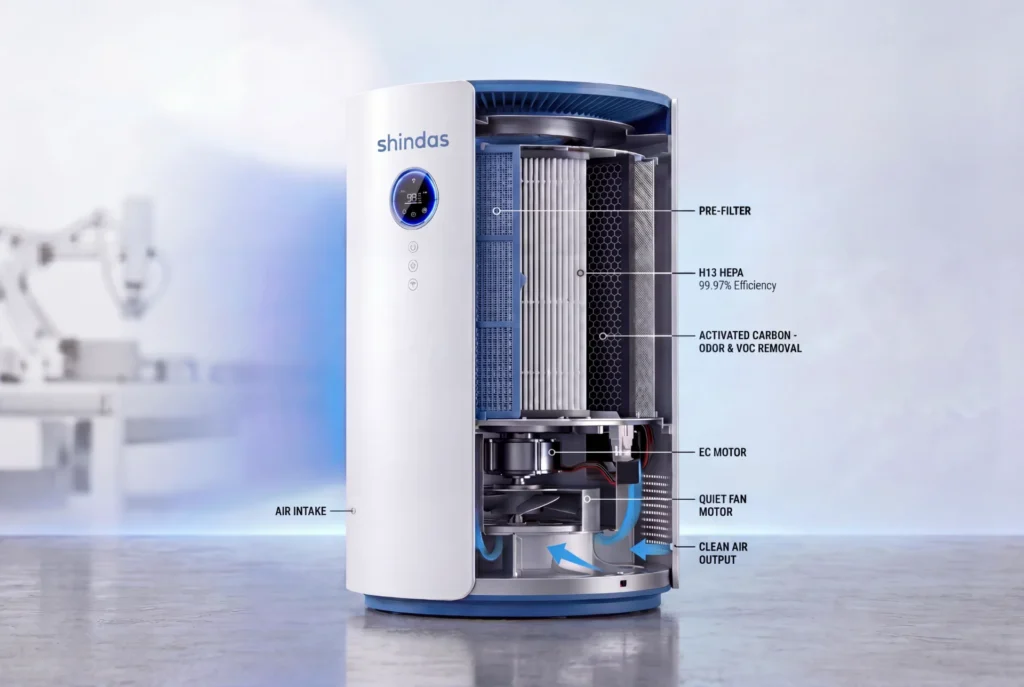
Reality: H13 and H14 perform nearly identically in residential use. But consumers will pay more for the H14 label. Displaying HEPA grade on product pages has direct marketing value.
Myth 2: Thicker filters clean better.
Reality: Filter thickness affects air resistance and noise — not cleaning performance. But the perception of “heavier filter = more material = better quality” is widespread.
Myth 3: Air purifiers eliminate the need for ventilation.
Reality: Completely false. Sealed rooms with running purifiers can build up CO2 to levels that cause drowsiness. Addressing this misconception openly builds brand trust.
The Three Parameters Consumers Actually Care About
Noise level, especially at lowest fan speed. Nighttime operation noise is the most common complaint category. Products performing below 35dB at low speed receive significantly higher ratings.
Filter change alerts and replacement cost. End users fear “filter expired without me knowing.” Built-in filter replacement reminders meaningfully reduce post-purchase complaints.
Coverage area accuracy. Overstated CADR values are the #1 complaint source on Amazon platforms. Accurate stated coverage matching real-world performance directly impacts rating scores and search ranking.
Implications for B2B Suppliers
Consumer-facing marketing works best when it centers on specific scenarios and emotional outcomes, not technical specifications. Translating “HEPA H14 filters 99.99% of particles” into “baby sleeps soundly, parents rest easy” — that’s the conversion path consumers actually follow.
Shindas Technology specializes in OEM/ODM air purifier manufacturing. We support customized filter specifications, low-noise design, and market-specific certifications. Contact us for B2B inquiries.